The solar industry spends enormous amounts of time discussing technology.
We analyze module efficiency, inverter architecture, battery chemistry, domestic manufacturing, interconnection reform, grid capacity, permitting, financing, and the rapidly changing economics of distributed and utility-scale energy.
But there is another piece of infrastructure that determines whether all of those investments ultimately succeed: the workforce responsible for designing, selling, permitting, installing, commissioning, inspecting, operating, and maintaining those systems.
A solar project can have excellent equipment and a technically sound design on paper and still underperform because of installation errors, poor commissioning, inadequate documentation, or a lack of qualified personnel available to troubleshoot the system years later.
That is why workforce development should not be viewed primarily as a recruitment function.
It is an investment in the technical infrastructure of the energy industry.
And nearly every stakeholder benefits from making that investment.
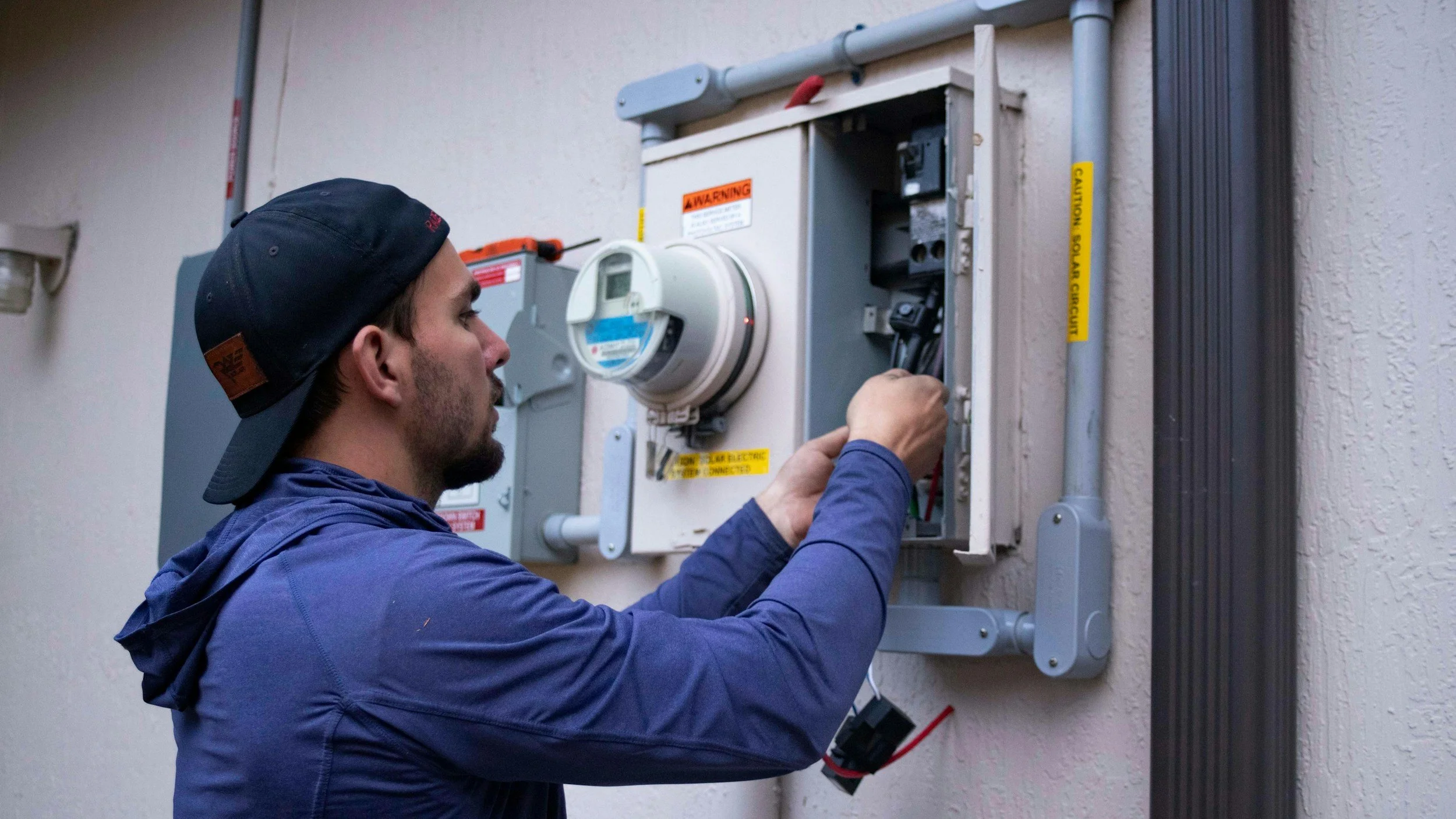
The Technical Workforce Is Part of the System
Solar and energy storage systems are becoming more sophisticated.
A residential installation that once consisted primarily of modules, racking, an inverter, and a utility interconnection can now incorporate batteries, automatic transfer equipment, energy management systems, generators, EV charging, load controls, rapid shutdown devices, module-level power electronics, smart panels, and utility communications.
Commercial projects add another layer of complexity through three-phase electrical systems, transformers, switchgear, protection coordination, demand management, supervisory controls, and increasingly sophisticated microgrid architectures.
The technical knowledge required to install these systems safely is expanding accordingly.
A technician may need to understand DC string design, conductor ampacity, voltage drop, overcurrent protection, grounding and bonding, communications wiring, battery operating parameters, utility interconnection requirements, manufacturer-specific commissioning procedures, and applicable sections of the National Electrical Code.
More importantly, that technician must understand how those pieces interact.
Training someone to install solar therefore cannot be reduced to teaching them how to mount modules or terminate conductors.
The industry needs people who understand systems.
That distinction becomes increasingly important as distributed energy resources become more integrated with buildings and the electric grid.
Installers Benefit Through Productivity and Reduced Rework
For EPCs and installation contractors, workforce development has one of the most direct financial impacts.
Labor is expensive.
Rework is even more expensive.
An incorrectly installed connector, poorly torqued termination, misplaced current transformer, incorrectly configured battery parameter, or communication problem can result in additional truck rolls, diagnostic labor, warranty claims, inspection failures, delayed permission to operate, and dissatisfied customers.
The original mistake may take five minutes to make.
Finding it three months later may take five hours.
A well-trained workforce reduces this operational friction.
Structured training can improve installation consistency, increase crew productivity, shorten commissioning times, reduce failed inspections, and allow experienced employees to spend less time correcting preventable mistakes.
It can also improve scalability.
One of the greatest challenges for growing solar contractors is maintaining quality while increasing installation volume. A company can sell projects faster than it can develop experienced field personnel.
Without standardized training, knowledge tends to remain concentrated among a handful of senior employees.
Those employees become bottlenecks.
A mature workforce development program converts individual knowledge into organizational knowledge.
Installation standards, commissioning checklists, troubleshooting procedures, mentorship, manufacturer training, code education, and documented quality-control processes allow companies to reproduce technical competence across multiple crews.
That is not simply workforce development.
It is operational risk management.

Manufacturers Benefit From Better Installations
Equipment manufacturers also have a significant financial interest in workforce quality.
A product can be engineered correctly and still develop a poor reputation because it is consistently installed incorrectly.
This is particularly important for inverters, batteries, rapid shutdown equipment, communications hardware, and energy management systems.
When installers do not fully understand equipment requirements, manufacturers may see increased technical-support calls, unnecessary return merchandise authorizations, warranty claims, commissioning delays, and negative customer experiences.
Sometimes the equipment is blamed for a problem that originated elsewhere in the system.
Manufacturer-supported training helps reduce that risk.
Certification programs, commissioning courses, technical documentation, field training, demonstration systems, and partnerships with workforce organizations create installers who understand not only how to install a product, but why its requirements exist.
Manufacturers gain another advantage: feedback.
Technicians working in the field encounter installation conditions that engineers cannot always reproduce in laboratories. A strong relationship between manufacturers and trained installers creates a feedback loop that can improve product design, documentation, firmware, mounting methods, connectors, commissioning procedures, and future training.
Workforce investment therefore becomes part of product development and quality assurance.
Distributors Benefit From Technical Competence Downstream
Distributors occupy an interesting position in the solar ecosystem because they sit between manufacturers and installers.
Their success depends partly on both sides functioning effectively.
A technically knowledgeable contractor is generally better equipped to specify compatible equipment, order appropriate balance-of-system components, plan projects accurately, and reduce emergency material requests caused by design or procurement mistakes.
Training can therefore improve purchasing quality.
It can also deepen the value of distribution.
A distributor that provides access to product education, manufacturer certifications, technical demonstrations, and hands-on training becomes more than a logistics provider.
It becomes part of the contractor's technical support network.
That relationship can increase contractor loyalty while simultaneously reducing errors involving equipment selection and compatibility.
Utilities Benefit From Better Distributed Energy Resources
Utilities also have a significant stake in workforce development, particularly as distributed generation and storage become more prevalent.
From the utility's perspective, a solar-plus-storage system is not simply equipment installed on private property.
It is an electrical resource interacting with the distribution system.
Incorrect inverter settings, improper current transformer placement, export-control configuration errors, protection issues, incomplete documentation, and misunderstanding of interconnection requirements can complicate the utility review and commissioning process.
As distributed energy resources become capable of operating dynamically, the importance of proper commissioning increases.
Export-limited systems must actually limit export.
Storage systems participating in time-of-use programs must respond as intended.
Systems participating in demand response or virtual power plant programs must communicate reliably.
Advanced inverter functions must be configured appropriately.
The workforce installing and commissioning this equipment becomes part of the interface between the customer and the grid.
Utilities that support contractor education, standardized interconnection training, technical workshops, and clear commissioning requirements can potentially reduce application errors and improve the quality of interconnected systems.
That benefits both the utility and the contractor.
Authorities Having Jurisdiction Benefit From Better Code Compliance
Inspectors and permitting authorities frequently experience the downstream effects of workforce gaps.
When installers lack sufficient code knowledge, AHJs see repeated corrections involving labeling, working clearances, grounding and bonding, rapid shutdown, conductor sizing, equipment placement, disconnecting means, battery installation requirements, and other safety provisions.
Every failed inspection consumes public and private resources.
The installer must return.
The inspector must return.
The project schedule changes.
The customer waits longer.
The utility may need to delay its portion of the process.
Better training can reduce that friction.
There is also value in creating opportunities for inspectors and installers to learn alongside one another.
Solar and storage technology evolves quickly. Codes evolve. Equipment evolves. Installation methods evolve.
Joint education can help establish a shared technical vocabulary and reduce situations where contractors and inspectors are interpreting unfamiliar technologies from completely different perspectives.

Customers Benefit From Safer, Better Performing Systems
Ultimately, workforce development affects the asset owner.
Customers rarely evaluate the quality of every conductor termination, flashing detail, communication cable, battery setting, or commissioning parameter.
They depend on professionals to get those details right.
A trained workforce can translate into better system uptime, fewer service calls, safer installations, more accurate monitoring, improved equipment longevity, and stronger long-term system performance.
This becomes especially important as customers purchase systems designed to operate for decades.
The person installing the system today is making decisions that may affect the asset 10, 15, or 20 years from now.
Good workmanship compounds.
Unfortunately, poor workmanship can compound too.
Financiers, Insurers, and Asset Owners Benefit From Lower Technical Risk
There is also a financial argument for workforce investment.
Solar assets are increasingly evaluated through risk.
Financiers care whether the project will perform.
Insurers care about installation quality and potential losses.
Commercial asset owners care about downtime.
Developers care about predictable construction schedules.
Operations and maintenance providers care about serviceability.
In each case, workforce quality influences technical risk.
Better documentation, standardized workmanship, qualified electrical work, disciplined commissioning, and effective quality assurance make an asset easier to evaluate and maintain.
For larger portfolios, relatively small improvements in installation quality can become meaningful when multiplied across hundreds or thousands of systems.
This makes workforce development relevant not only to construction teams, but also to the capital supporting the projects they build.
Experienced Tradespeople Benefit Too
Workforce development is often discussed as though it only concerns people entering the industry.
That misses an important opportunity.
Some of the most valuable technical knowledge in the energy industry exists inside the heads of experienced electricians, engineers, technicians, inspectors, and construction professionals.
Many have accumulated decades of experience solving problems that cannot be learned entirely from a textbook.
A strong workforce program creates mechanisms for transferring that knowledge.
Mentorship should therefore be treated as a technical resource.
An experienced electrician teaching an apprentice how to recognize a poor termination, trace an unexpected voltage condition, interpret a one-line diagram, or troubleshoot a system logically is transferring institutional knowledge.
Companies should create incentives for that transfer rather than assuming it will happen automatically.
Otherwise, industries risk losing decades of practical knowledge every time an experienced professional retires.

Students and New Entrants Gain a Career Path, Not Simply a Job
For students and people entering the workforce, the energy transition creates something especially valuable: multiple technical career pathways.
Someone may begin as an installer and become an electrician.
An electrician may become a commissioning technician.
A technician may move into design, engineering, project management, quality assurance, operations and maintenance, technical sales, manufacturing support, or entrepreneurship.
That mobility matters.
Workforce programs are strongest when they show participants not only how to obtain their first job, but how technical knowledge can accumulate into a career.
Credentials, apprenticeships, manufacturer certifications, field experience, continuing education, and mentorship can create a progression from entry-level work toward increasingly sophisticated technical responsibilities.
The industry benefits when people can see that progression clearly.
Government and Communities Gain Durable Economic Capacity
Public investment in workforce development can also produce benefits beyond individual solar projects.
Energy infrastructure requires local labor.
Training programs can help communities develop electricians, technicians, construction professionals, designers, and project managers who can work across multiple sectors.
Many of these skills are transferable.
Electrical knowledge gained through solar may also apply to battery storage, EV charging, building electrification, generators, controls, microgrids, and other infrastructure.
That means workforce development can create economic capacity that remains valuable even as individual technologies and incentive programs change.
For policymakers and economic-development organizations, this distinction matters.
The objective should not simply be to create temporary jobs associated with a particular funding cycle.
The stronger objective is to create durable technical capability within communities.
Workforce Development Requires an Ecosystem
No single organization can build the energy workforce alone.
Contractors provide real-world experience.
Manufacturers provide product-specific technical knowledge.
Distributors connect equipment and education.
Educational institutions provide structured learning.
Trade organizations create industry standards and professional networks.
Utilities provide grid-specific knowledge.
AHJs provide code and safety perspectives.
Government programs can provide funding and access.
Experienced tradespeople provide mentorship.
Students and workers bring the human capital that ultimately makes the entire system function.
The strongest workforce programs connect these groups rather than isolating them.
A classroom without field experience has limitations.
Field experience without foundational technical education has limitations.
Manufacturer training without broader electrical knowledge has limitations.
Technical knowledge without mentorship has limitations.
The goal should be to create a continuous pathway between education, hands-on experience, credentials, employment, specialization, and eventually leadership.
The Industry Should Measure Workforce Development Like Infrastructure
If workforce development is infrastructure, we should evaluate it accordingly.
That means moving beyond counting how many people attended a training session.
Useful metrics can include certification completion, apprenticeship progression, employee retention, installation productivity, first-pass inspection rates, commissioning time, safety performance, service-call frequency, warranty claims, rework rates, advancement into higher-skilled positions, and long-term employment within the energy sector.
Those measurements connect workforce investment to operational outcomes.
They also help answer an important question:
Did the training actually make the energy system better?
Because ultimately, that should be the objective.
The energy transition will require enormous quantities of hardware, capital, engineering, and infrastructure.
But every one of those investments eventually reaches a human being.
Someone has to design it.
Someone has to install it.
Someone has to inspect it.
Someone has to commission it.
And years from now, someone will have to understand it well enough to diagnose what went wrong.
If we want better energy infrastructure, we have to invest in the people responsible for building and maintaining it.
Workforce development is not separate from deployment.
It is one of the technologies that makes deployment possible.